
You have a folder of bookmarked articles, a spreadsheet of niche ideas, and a notes file with a business name you have changed four times. Another week goes by and nothing you have made is live. If that describes you, you are probably stuck in the planning phase of online business, and it helps to know why that happens before trying to fix it.

Why planning feels so safe
While you are planning, nothing can go wrong in public. A plan has no readers, so nobody can ignore it. A list of niche ideas cannot be criticised, and a half-built outline cannot fail.
Starting changes that. The moment you publish a page or send a message, you produce evidence of what you can do, and the evidence might be unimpressive at first. Part of you would rather avoid finding out, so it steers you toward activities that feel productive and carry no risk of being judged. Research is the most respectable of these.

That makes the habit understandable. Wanting to avoid looking foolish is ordinary, and nearly everyone who starts something new feels it. The useful move is to notice it, so you can stop treating it as a character flaw and start treating it as a pattern you can work around.
How to tell planning from avoiding
Real planning exists, and some of it is necessary. You need to know roughly what you are building and who it is for. The trouble starts when planning stops feeding action. Three questions help you tell the difference.
- Can I say in one sentence what I will do tomorrow? If your plan has produced no concrete next action, it is not yet doing its job.
- Will what I am doing now change a decision I actually have to make? Research that answers a pending question is useful. Research that only produces more reading is not.
- When did I last make something another person could see? If the honest answer is “not since I began planning,” the planning has replaced the doing.
If you answered those questions in a way that made you wince, that is useful information and nothing to be ashamed of. It tells you where to put your attention.
The four disguises planning wears
Avoidance rarely announces itself. It shows up looking like diligence, and each form has a small action that replaces it.
More research
Research feels responsible, and there is always another comparison article or another video to watch. It never reaches an end on its own because the internet does not run out.
Replace it with a single written question. Before you read anything, write down the one thing you need to know to take your next action, such as “What do beginners usually ask about this topic?” Read until you can answer it, then stop and use the answer.
The perfect niche
Choosing a niche carries real weight, so it makes a good hiding place. You can spend months comparing topics because no choice has been tested, and an untested choice cannot disappoint you.
Replace it with a good-enough decision that has an end date. Pick the topic you could write about for a month without getting bored and that has people who would plausibly want help. Then write one paragraph describing the person you would be helping. You can adjust the niche later, but you can only adjust something that exists.
One more course
Another course feels like preparation. Often it is a way of postponing the moment you have to apply what you already know, because watching a lesson is easier than doing the exercise attached to it.
Replace it with finishing what is already open. Go back to the lesson you started and complete its exercise, even if the result is rough. One finished exercise teaches more than three lessons watched and left behind.
Waiting until you feel ready
This one sounds the most reasonable and is the hardest to spot. You tell yourself you will begin once you feel confident, but confidence usually comes after you have done the thing a few times, so waiting for it has the order backwards.
Replace it with twenty minutes of action before you decide how you feel. You do not need to be ready to write a headline. You only need to write one.
Shrink the next step until it takes twenty minutes
Most people stay stuck because their next step is too large to start. “Build my website” has no clear beginning, so you open the laptop, feel overwhelmed, and read something instead.
A good next action passes four tests:
- It begins with a verb you can picture yourself doing, such as write, list, record, or send.
- It fits inside twenty minutes.
- It has a clear end, so you know when you are finished.
- It leaves behind something you can look at.
Compare “work on my first post” with “write a headline and three bullet points for my first post.” The first has no finish line. The second does, and you can complete it with a cup of tea beside you.
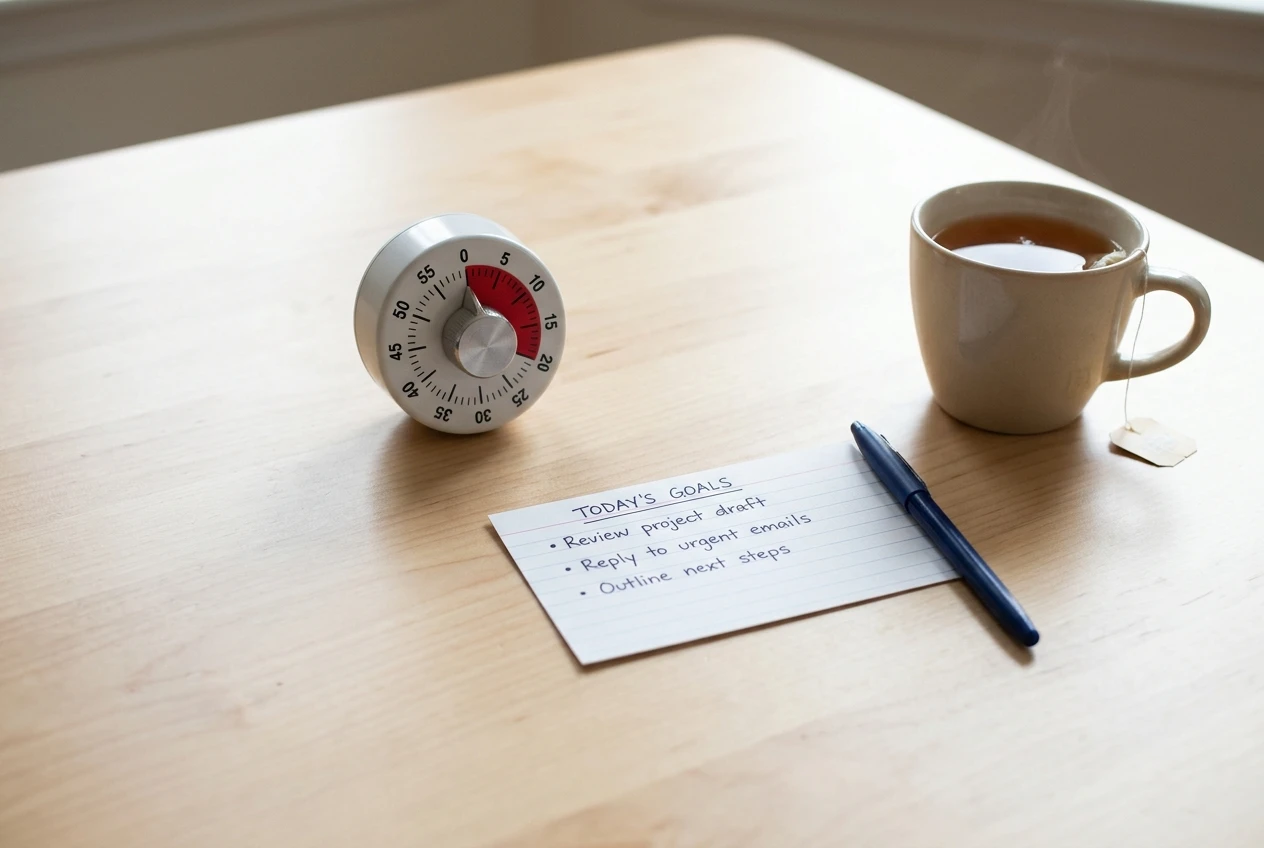
Other actions of this size include listing five questions a beginner would ask about your topic, writing the first 150 words of an article, or sketching the order of four pages on paper. None of these will build a business alone, but each one moves something from your head into the world, and that is the step planning keeps skipping.
If a task still feels heavy, cut it in half again. A step that feels too small to bother with is usually about the right size.
A simple one-week rhythm
Small actions work best when they repeat. Here is a week you can follow, with one twenty-minute action a day and a short review at the end.
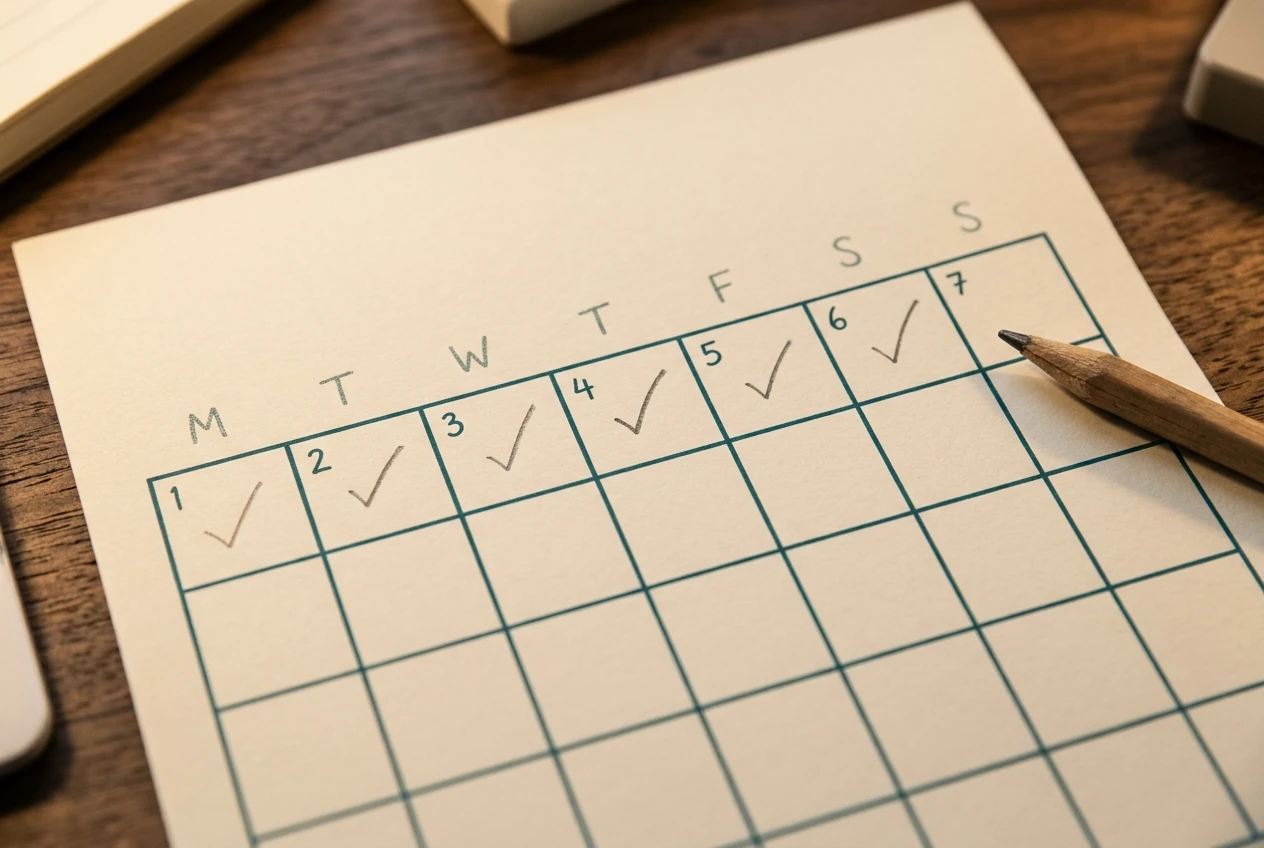
- Day 1: Write one paragraph describing who you want to help and what problem they have.
- Day 2: List ten questions that person might type into a search box.
- Day 3: Choose one question and write a rough outline of the answer.
- Day 4: Write the opening 150 words of that answer.
- Day 5: Finish the draft, even if it feels unpolished.
- Day 6: Read it aloud once, fix whatever sounds awkward, and publish or save it in its final form.
- Day 7: Look back.
The look-back matters as much as the work. Spend ten minutes asking three things: which action was easiest, which one did I put off, and what did I learn that I could not have learned by reading? The action you put off usually points at what you are most afraid of, and that is worth knowing.
If you miss a day, pick up with the next action instead of starting the week over. The point is a habit of finishing small things, and a missed day does not erase the ones you completed.
Why a path someone else has laid out makes starting easier
Even with a twenty-minute rule, you still have to decide what the next action should be, and deciding is where many people stall. Every decision gives avoidance another chance to step in.
A path that someone else has put in order removes most of those decisions. You do not choose between ten possible tasks, because the next one is already there. Your effort goes into doing it instead of into working out whether it is the right one. If you want to see what that looks like for someone in your position, what a guided path actually means for someone who feels stuck explains it in more detail.
This does not remove your responsibility. You still have to do the work and make real choices along the way. What it removes is the daily guessing about where to begin, which for many people is the main thing keeping them at the planning stage.
What to look for in the support around you
Starting is easier with the right support, and some support is better than others. Before you commit to any program, community, or mentor, check a few things.
- A clear next step. At any moment you should be able to see what to do next without having to figure it out from scratch.
- Real people who answer questions. A place to ask when you are confused, with replies from someone who knows the answer, keeps a small problem from becoming a week-long stall.
- Visible progress. You should be able to see what you have completed and what comes next, so you notice movement.
- Honest expectations. Good support is straightforward about the effort involved and does not promise fast results.
I cover this in more depth in how to spot real direction and support before you commit to any program, which is worth reading before you spend money on anything.
Pick your twenty-minute action and do it today
You do not need a better plan to start. You need one action that is small enough to finish and specific enough that you know when it is done.
Choose it now. It might be writing the paragraph about who you want to help, listing ten questions, or finishing the exercise from the lesson you left open. Set a timer for twenty minutes, do the action, and stop when the timer ends. Then do another small one tomorrow.
If you want a clear next step instead of another plan, take a look at Guided Path inside Wealthy Affiliate and start with the first task it gives you.