
If you keep asking yourself why you feel stuck after 6 months of affiliate marketing, the answer is probably not that you lack talent or effort. The kind of work you are doing has changed, and nobody announced it. For six months you could follow instructions. Now the instructions have mostly run out, and what is left is judgment, which feels much less comfortable.
This article describes that change, shows you how to read your own site to find what is stuck, and lays out a plan for the next four weeks.
Why month six feels different from every month before it
Month three has a clear enemy: the urge to quit. The posts have not paid off, the excitement has worn thin, and walking away looks reasonable. If that was your experience, this piece on why beginners walk away around month three covers it.
Month six is a different problem. You are probably still showing up, and you may not want to quit at all. What you lack is a next move you trust. You open the dashboard, look at the same posts, and feel unsure what to do with the next hour.
That uncertainty is easy to read as a sign that something is wrong with you. It is more accurately a sign that the work now asks for a skill the first months never required.
The checklist runs out: how the work shifts from following to deciding
The early months come with a list. Choose a niche, set up the site, write the first posts, publish them, repeat. Every item has a clear finish line, and ticking it off gives you a small, reliable reward.

Around month six the list thins out, and the questions change:
- Which of my existing posts deserve more attention?
- What should I write next, and why that topic?
- Is this niche working, or am I just impatient?
- What am I doing out of habit that no longer earns its time?
Nobody marks these answers right or wrong, and the feedback from a small site arrives slowly and is hard to read. In the first months, the question was whether you completed the task. Now it is whether you chose the right task.
This is why the stall feels like a ceiling. You have not run out of ability. You have moved from executing instructions to deciding between options, and decisions need evidence. The good news is that you now have six months of evidence about your own work, which you did not have in month one.
Three things that feel like a ceiling but are not one
Some of what looks like a hard limit is an ordinary feature of a young site.
Flat or tiny traffic numbers. A site with a modest number of posts will usually show modest numbers, and a flat line across the whole site tells you very little. The useful information is in the individual posts: which ones get any visits at all, and which get none. If you have not looked at the numbers post by post, you do not yet know whether the site is flat or whether two posts are working and the rest are not. Your first posts getting zero views explains what is normal early on.
Running out of ideas. Six months of writing tends to use up the obvious topics, the ones you thought of on day one. The next set comes from different places: questions readers ask in comments or messages, the suggestions a search engine shows as you type a topic, and the questions other people in the community are asking. Running out of obvious ideas means you have reached the stage where you need to go and collect better ones.
Doubt about the niche. After six months, many people start to wonder whether they picked the wrong subject. Sometimes that is true, but it is rarely something you can settle from a feeling. Before you change direction, check whether the posts are specific, whether they answer a real question, and whether they link to each other. A thin site in a good niche looks the same as a thin site in a bad one, and switching niches only resets the clock.
How to review your own site in one honest hour
Set a timer for sixty minutes and write your findings in a plain document or notebook. Do not fix anything during the hour. Fixing is a separate job, and mixing the two turns a review into a rewrite.

Minutes 0 to 15: make the inventory. List every published post with its title, the date it went live, and any traffic or click figures your site tools show. If you cannot find those figures, write that down, because not tracking anything is itself a finding.
Minutes 15 to 35: read three posts as a stranger. Pick one post that performs best, one that performs worst, and one in the middle. Read each as if you had just arrived from a search. Ask whether the first paragraph tells the reader they are in the right place, whether the post answers the question in its title, and whether it points to a next step, such as another post or a recommendation.
Minutes 35 to 50: look at your habits. Check how many posts you published in each of the last three months. Note the weeks you went quiet and what happened in them. This is information, not a verdict.
Minutes 50 to 60: write three sentences. Finish this sentence three ways: “The thing that seems to be working is…”, “The thing that seems to be stuck is…”, and “The thing I do not know yet is…”. The third sentence matters most, because it names what to ask someone or test next.
What to keep, what to improve and what to stop
With the hour’s notes in front of you, sort everything into three groups.

Keep anything that has evidence behind it. A post that gets steady visits stays as it is. A writing rhythm you maintained for several weeks stays too, even if it was unglamorous.
Improve posts that aim at a real question but answer it thinly. Common fixes are a clearer opening, a more specific title, a missing explanation that a reader would obviously want, and internal links to your other relevant posts. Improving a post you already wrote is often faster than writing a new one, and it uses the work you have already done.
Stop the activities that feel productive but produce no evidence. For many people at this stage that means:
- Redesigning the site layout again.
- Switching tools in search of a better one.
- Checking statistics several times a day.
- Writing posts on topics far outside the niche because they seemed easy.
Stopping these does not mean you are slowing down. It frees up hours for the work that your review pointed to.
A four-week plan for getting moving again
This plan assumes a few hours a week, and you can scale it up or down. The aim is a clear sequence, so you are not deciding from scratch every day.
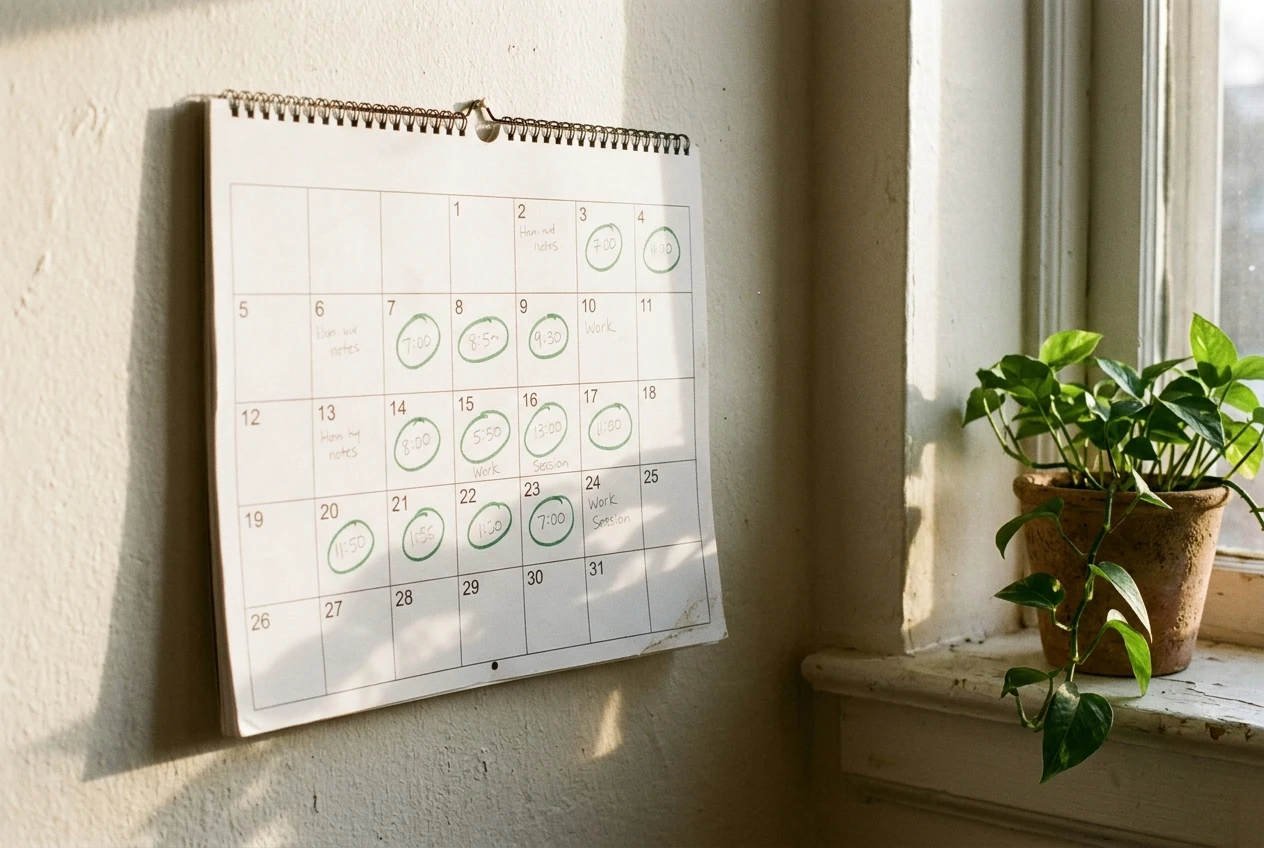
Week 1: Review and set the schedule. Complete the one-hour review in the first two days. Then choose the days and times you will work for the next four weeks and write them down. If routines have been your weak point, this article on why routines die around day 15 is worth reading before you commit.
Week 2: Improve your best candidates. Take the two or three posts from your “improve” list that have the clearest topic. Rewrite the openings, fill the obvious gaps, add links to related posts on your site, and republish them. Note the date of each change.
Week 3: Publish new posts from real questions. Write one or two new posts built from reader questions, search suggestions, or questions you have seen others ask. Each should answer a single question completely, and each should link to at least one older post.
Week 4: Check and decide. Look again at the posts you touched. Do not expect dramatic change in four weeks. Look for small signals: a post that now gets visits, a new question in the comments, a section you realise you can expand. Then write the plan for the next four weeks with what you learned.
If you stay with this sequence, you will have a decision-making rhythm: review, improve, publish, check. That rhythm is what the work looks like from month six onward, and it is a skill that grows with repetition.
When the next move needs a person, not another lesson
Sometimes the review leaves you with the third sentence unanswered. You cannot tell whether a post is good, whether the niche has room, or whether your plan makes sense. More lessons rarely settle this, because a lesson answers a general question and you are asking about your specific site.
That is the point to put your site in front of someone who has been through this stage. A person can look at your actual posts and tell you what you cannot see from the inside. How long is too long to struggle alone describes the signs that you have reached that point, and how to ask for help in the Wealthy Affiliate community shows how to phrase a question so the answers you get are usable the same day.
A useful question gives context: your niche, the post you are asking about, what you have already tried, and what you expected to happen. “Why isn’t this working?” invites guesses. “This post has been live for three months, answers this specific question, and gets no visits; what would you check first?” invites a real answer.
If month six has left you without a clear next move, take a look at the Guided Path inside Wealthy Affiliate, which gives you a direction to follow, and bring your questions to the community so someone who has been there can help you work out what comes next.